Kongdu Joobaek Review: Handmade Tofu Dining Right at Dongmyo Station
If you’re searching for a Dongmyo handmade tofu restaurant review, here’s an honest one. Kongdu Joobaek is right at the station exit — literally one minute on foot — and I finally made it in for a weekend lunch with my partner.
AT A GLANCE
📍 Location: Near Dongmyo Station (Exit 1), Jongno-gu, Seoul⏰ Hours: 06:00 AM – 9:30 PM daily
💰 Price: Around 11,000–16,000 KRW per dish (we spent 30,000 KRW for two)
🚇 Getting There: Dongmyo Station, 1-minute walk from the exit
🅿️ Parking: Street parking nearby; walking recommended
📞 Phone: 02-762-9289
What Is Kongdu Joobaek?
The sign says it all: 수제두부요리전문점 — a specialist in handmade tofu dishes. The name itself (콩두주백, with a Chinese character 豆 meaning “bean”) signals that tofu is the main event here, not a side dish. They make their own sundubu (soft tofu) in-house, and it shows up across most of the menu in different forms — soft tofu stew, tofu hot pot rice, and the signature tofu kimchi jeyuk where a thick slab of fresh tofu takes center stage.
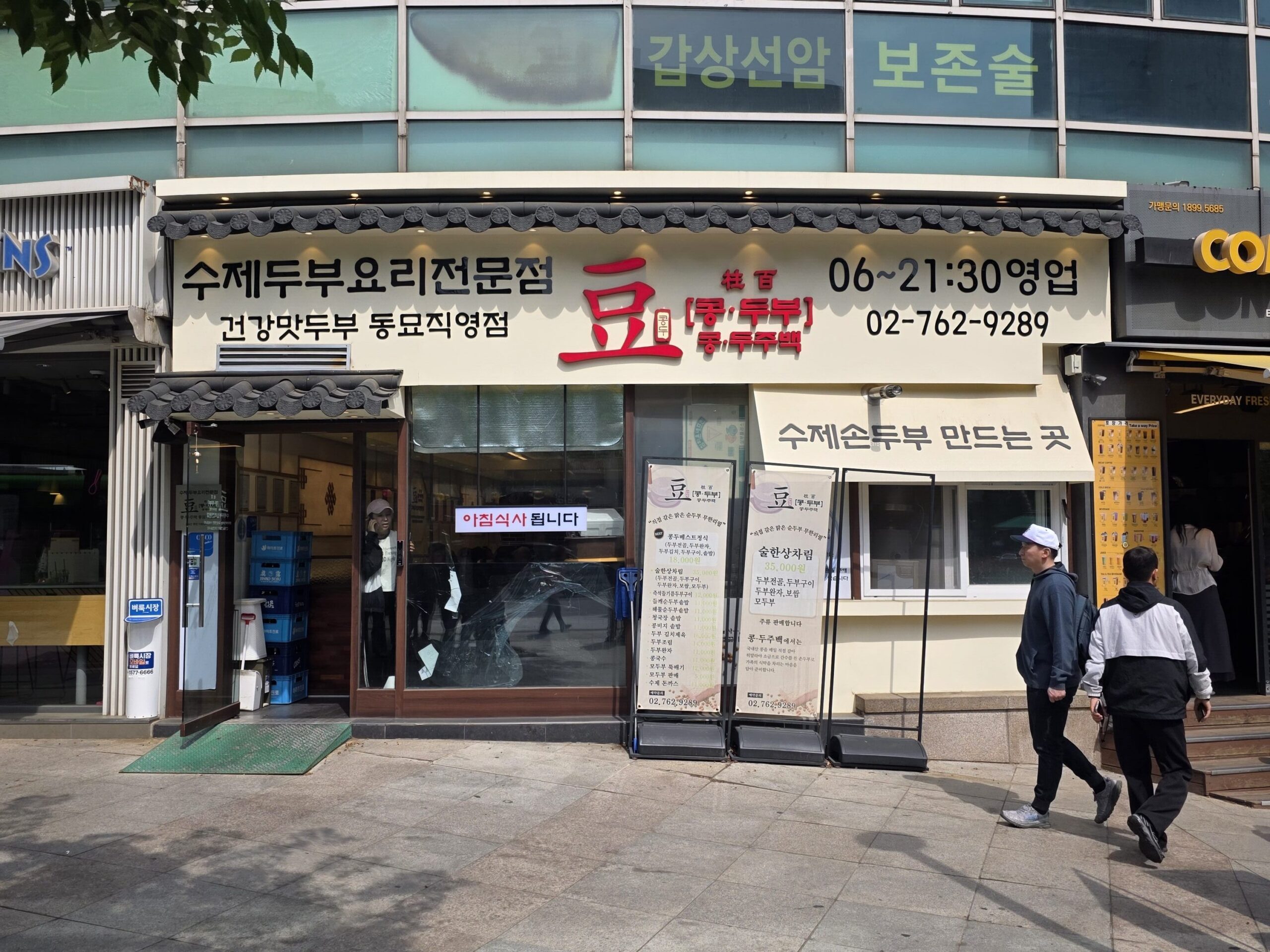
This local place opens at 6am for the breakfast crowd, and stays busy through lunch. The interior is clean but no-frills — wooden trays, brass bowls, stone pot rice on wooden trivets. Very much a traditional Korean dining setup, the kind that feels very familiar if you’ve spent any time eating around Seoul.
Dongmyo neighborhood itself is worth mentioning. It’s mostly known for its flea markets and vintage clothing stalls, which gives the whole area a slightly old-school, unhurried vibe. Kongdu Joobaek fits right in — no Instagram-bait décor, no queue out the door, just a steady stream of locals who clearly know what they came for.
Getting There and Getting Settled
Step out of Dongmyo Station and you’re basically already there. One minute on foot, maybe less. We walked in on a weekend late afternoon without waiting at all, but usually this place is quite crowded during the lunch time. You can place order using kiosk on each table, which makes things quick and easy even if you’re not totally fluent in Korean (the menu has photos).
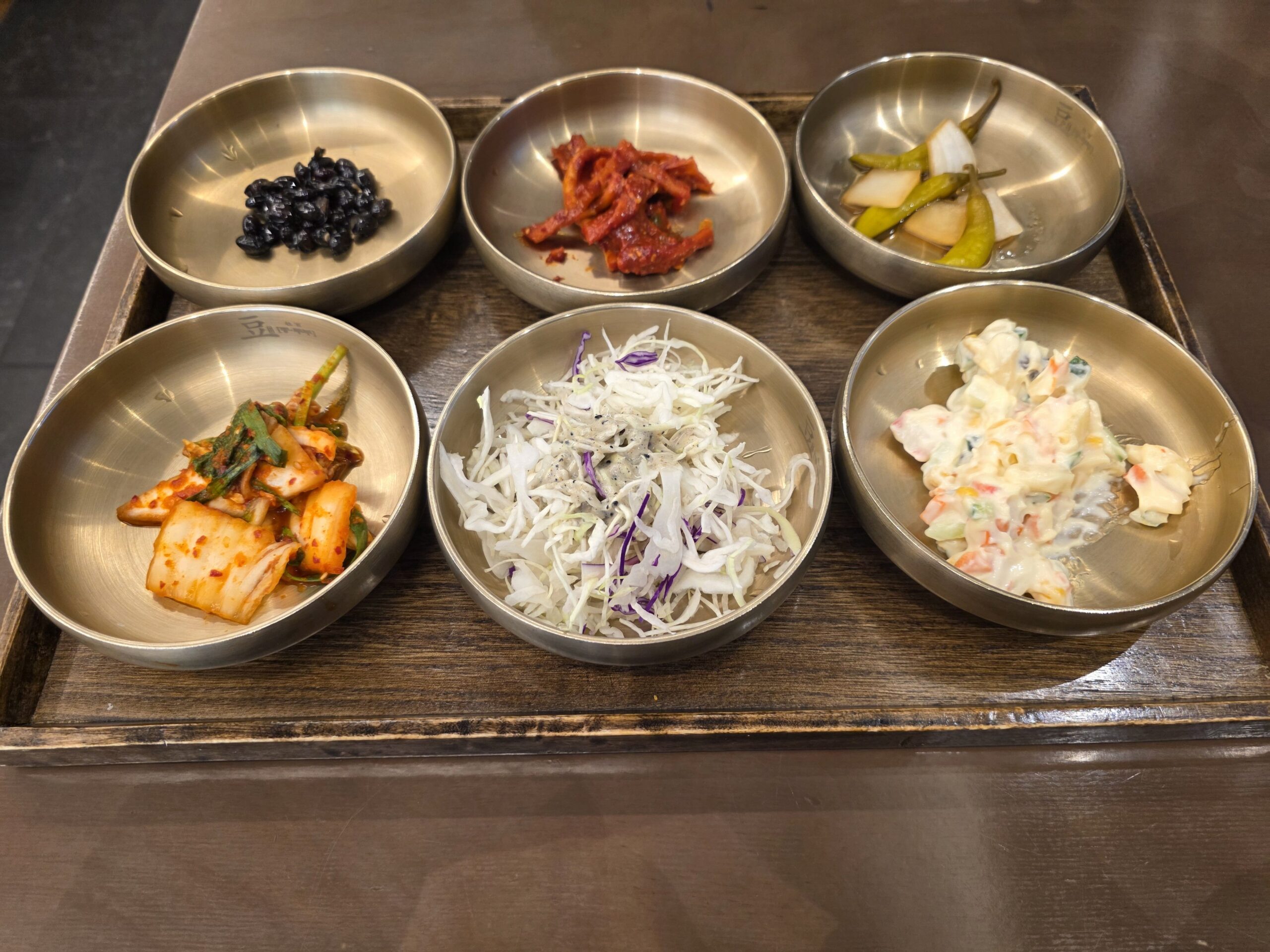
The basic table setup is tidy and organized. Stone pot on a wooden board, a large wooden tray holding six side dishes, chopsticks and a brass spoon — yes, it’s something you’d expect from a local Korean lunch spot.
The Banchan Spread
Before the mains even arrived, the banchan(side dish) tray landed — six side dishes: kimchi, braised black beans (kongjaban), coleslaw, cabbage salad, a spicy red pepper stir-fry, and pickled green peppers with radish. That’s a proper spread for the price.
The kongjaban — sweet, soft black soybeans — was the standout for me. It’s a classic Korean side dish that you don’t always see everywhere anymore, and theirs was good: glossy, not too sweet, with a soft bite. The coleslaw was an unexpected but welcome addition, creamy and mild, a nice reset between bites of the spicier mains.
What I appreciated most is that the banchan felt considered, not just filler. Each dish had a distinct flavor profile, and you’d naturally rotate between them as you ate through the meal.
The Main Dishes
We ordered two things: the Tofu kimchi jeyuk (두부김치제육, without rice, 16,000 KRW) and the haemul sundubu sotbap (해물순두부솥밥, 11,000 KRW). We also added a stone pot rice (돌솥밥) for 3,000 KRW, bringing the total to 30,000 KRW for two.
Tofu Kimchi Jeyuk
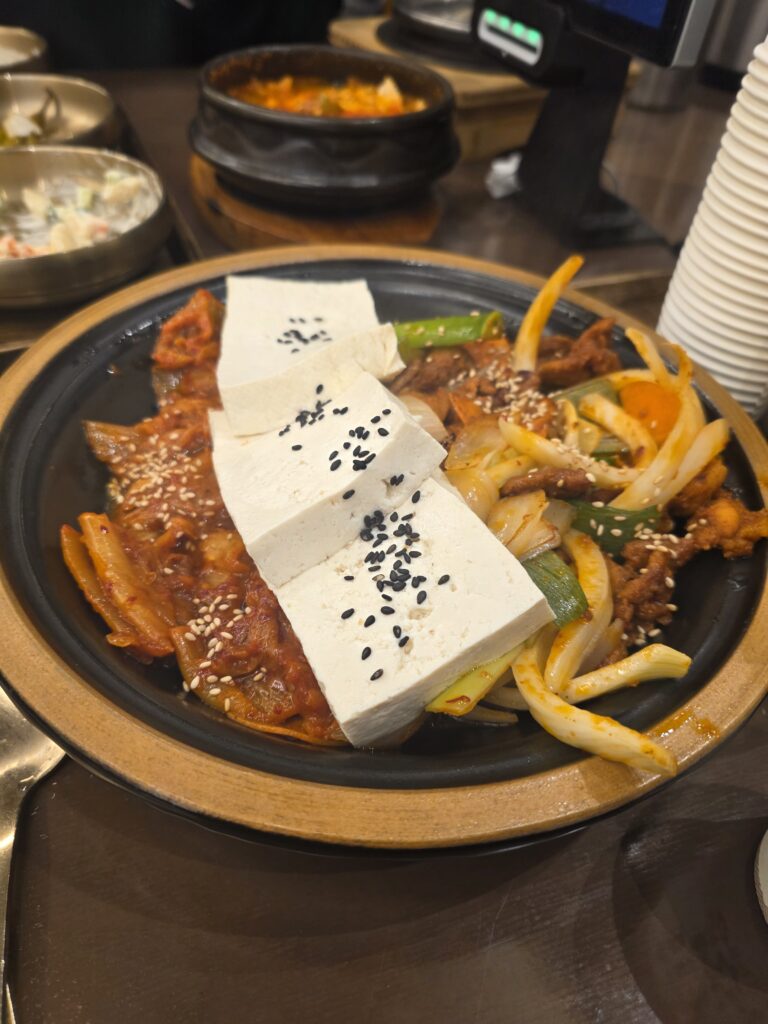
This is the showstopper dish visually. A wide cast iron plate arrives with stir-fried pork and kimchi on one side, sautéed vegetables on the other, and a whole block of fresh white tofu standing upright in the center — topped with a scatter of black and white sesame seeds. It looks great.
Taste-wise, it’s solid. The pork is well-seasoned and the kimchi has a good depth to it — clearly not fresh kimchi, the fermented kind that’s been aging. The tofu itself is mild and smooth, which works as a cooling element against the spicy meat. It’s not a dish that’s going to knock you out with complexity, but everything works together. If you like bold kimchi flavor, you’ll be happy. If you’re expecting something delicate, this isn’t it.
Haemul Sundubu Sotbap
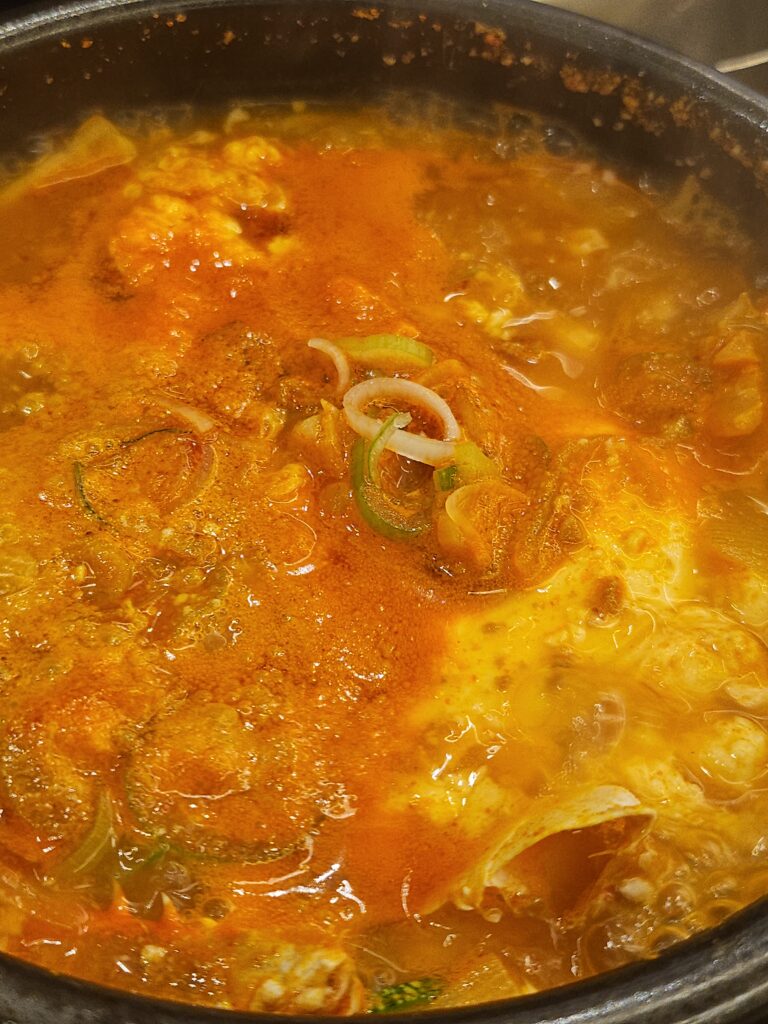
The seafood soft tofu stone pot rice was the more subtle of the two. A bubbling, deep orange broth full of silken tofu and small pieces of seafood, served alongside a stone pot of rice and the full banchan spread. The broth is rich and slightly spicy — spoonful-after-spoonful kind of good. The sundubu is genuinely soft and fresh-tasting, which makes sense given the whole handmade-tofu premise.
The dolsotbap (stone pot rice) trick here is to wait until the broth arrives, then pour a little into the empty pot near the end of the meal to make nurungji — the crispy rice crust. You can ask the staff for hot water to help with this. It’s a small ritual but a satisfying one.
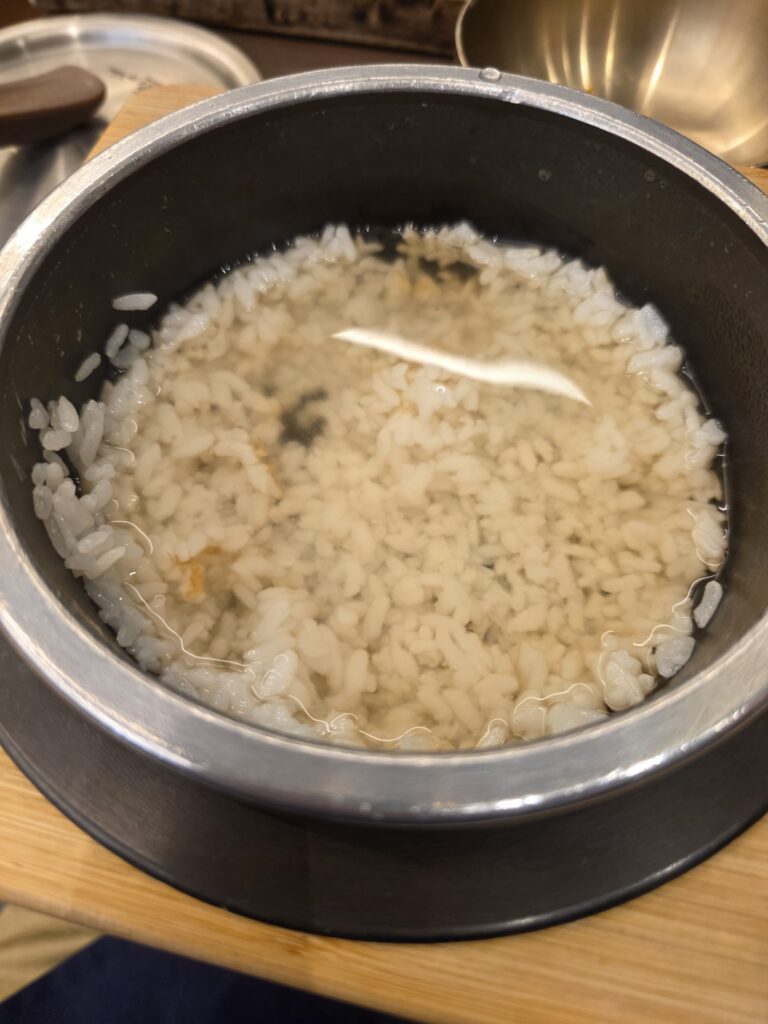
Overall impression: both dishes were good, not exceptional but honest Korean food. The kind of lunch you’d be happy to have on a regular rotation.
The Vibe
Casual and functional. It’s not a date spot or a place you’d linger for hours — it’s a place you go to eat well and efficiently. The crowd at lunch was a mix of locals and a few people who looked like they’d wandered over from the Dongmyo flea market area. Bright lighting, the sounds of the kitchen, conversations at neighboring tables. It’s unpretentious in the best way.
Who Is This Place Good For?
If you’re exploring the Dongmyo or Sindang area and want a filling, affordable Korean lunch, this works really well. It’s also great for solo diners — the kiosk ordering and table setup make it comfortable to eat alone. The 6am opening means it doubles as a breakfast option, which is genuinely rare for a sit-down tofu restaurant.
Not ideal if you’re looking for a quiet, atmospheric meal or something with a lot of wow-factor. But for a clean, affordable Korean lunch with handmade tofu at the center? It does exactly what it promises.
Practical Tips Before You Go
A few things worth knowing. The restaurant opens at 6am, which is rare for a sit-down Korean meal — so if you’re an early riser or staying nearby, it’s worth keeping in mind as a breakfast option. The haemul sundubu works just as well first thing in the morning as it does at lunch.
One small tip: when your stone pot rice is nearly finished, pour a little of the sundubu broth into the pot and let it sit for a minute. The crispy rice crust (nurungji) that forms at the bottom is one of those simple pleasures that makes a Korean meal feel complete.
Getting There
Right at Dongmyo Station — one of the easiest restaurant locations in Seoul. Line 1 or Line 6 both stop here. Walk out of Exit 1 and the restaurant is directly in front of you.
FAQ
Q: Do I need a reservation?
A: No — walk-ins only, and the turnover is quite fast. We got seated immediately on a weekend.
Q: Is it good for solo dining?
A: Absolutely. The kiosk ordering and quick service make it easy to go alone. Most dishes are single-served.
Q: Is it open for breakfast?
A: Yes — they open at 6:00 AM, which is pretty unusual for a proper Korean restaurant. Morning tofu soup is a thing here.
Q: Is there parking nearby?
A: There are a few public parking lots in the area, but given it’s literally one minute from Dongmyo Station, transit is the easy call.
Closing
Kongdu Joobaek is straightforward, honest Korean food restaurant at a fair price, in one of the most convenient locations you’ll find in Seoul. The handmade tofu is the real draw — soft, fresh, and noticeably different from the packaged kind. The tofu kimchi jeyuk is worth ordering for the presentation alone, and the haemul sundubu sotbap is a comforting, well-executed bowl.
Is it life-changing? Honestly, no. But it’s the kind of place you’re glad exists — reliable, affordable, and genuinely focused on doing one thing well. We’d go back, and for 15,000 KRW per person including rice and six side dishes, it’s hard to argue with the value. If you’re in the Dongmyo area, it’s an easy yes.