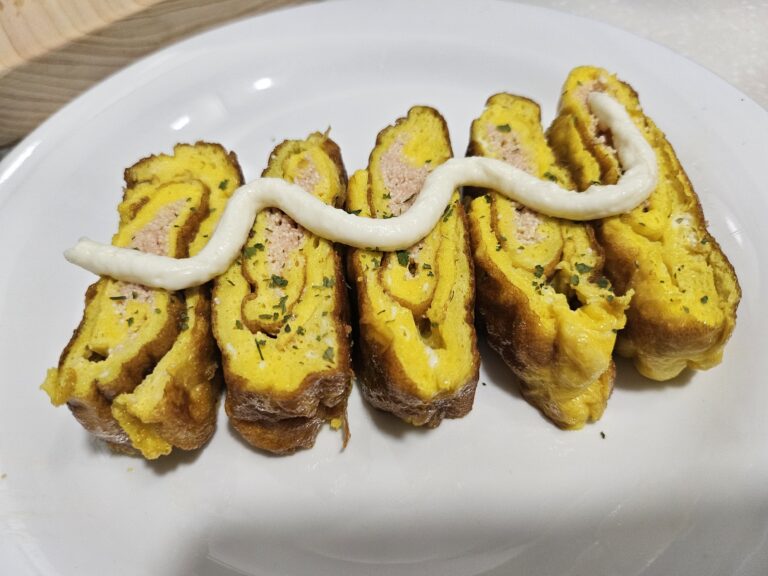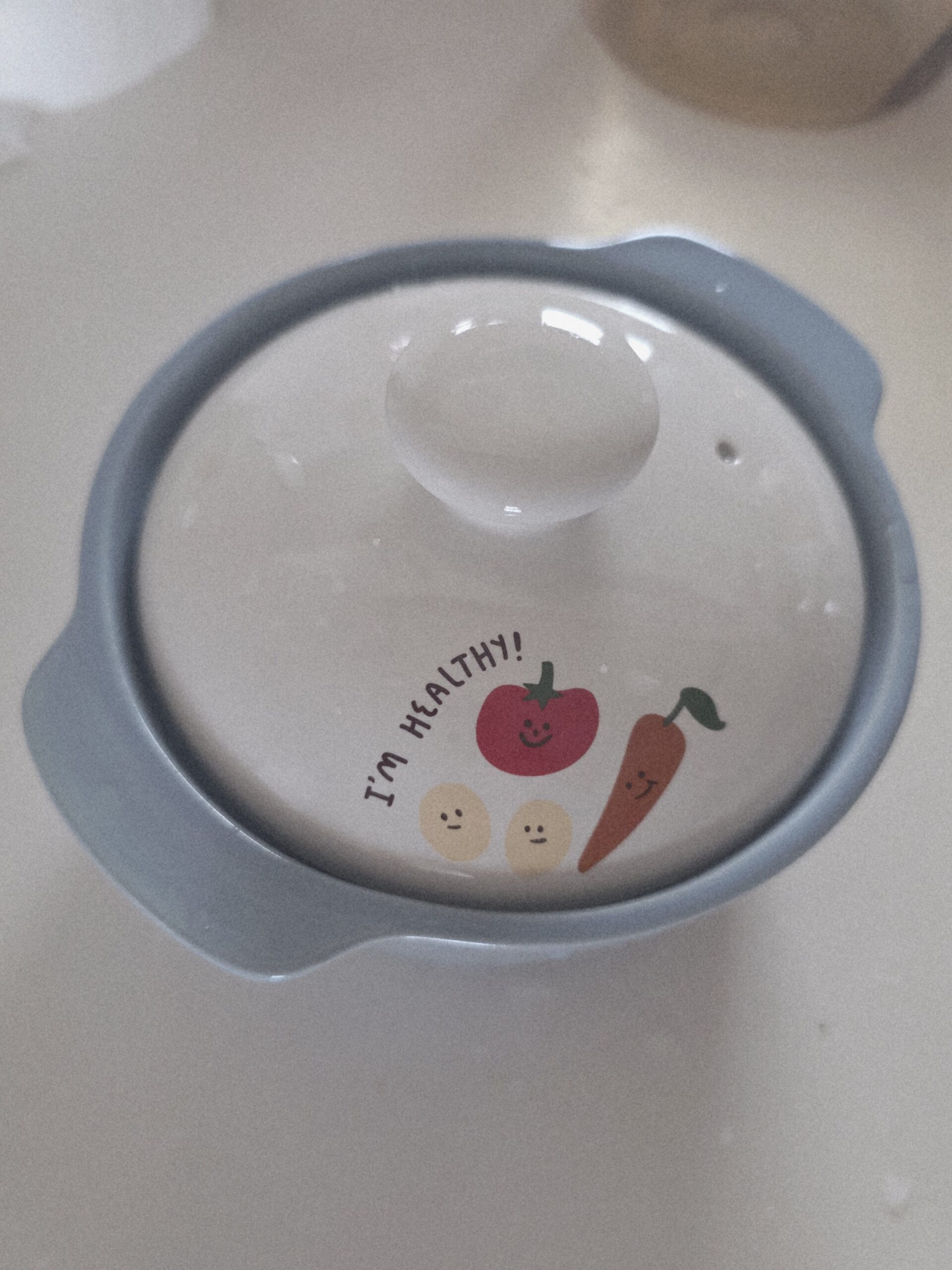
Daiso Ceramic Egg Steamer Review: Fluffy Korean Egg Custard in 3.5 Minutes for Under $3
If you’ve ever craved soft, silky Korean egg custard (계란찜, gyeranjjim) but didn’t want to deal with a steamer pot, a separate burner, or a pile of dishes — this little Daiso find might be exactly what you need. I picked up the Daiso Ceramic Egg Steamer for just 3k KRW (about 2.3 USD), tested it at home with a simple green onion and carrot recipe, and I’m here to give you my completely honest take on this Daiso ceramic egg steamer Korea review.
This post is for anyone living alone, busy workers with no time to cook, or parents looking for a quick, healthy side dish for their kids.
AT A GLANCE
🏷️ Brand: Daiso Korea💰 Price: ₩3,000 (approx. $2.30 USD)
🛒 Where to Buy: Any Daiso store in Korea
🔧 Material: Ceramic (도기)
⏱️ Cook Time: 3 minutes 30 seconds (microwave)
⭐ Rating: 4 / 5 stars
Have You Heard of “Daiso Ceramic Egg Steamer”?
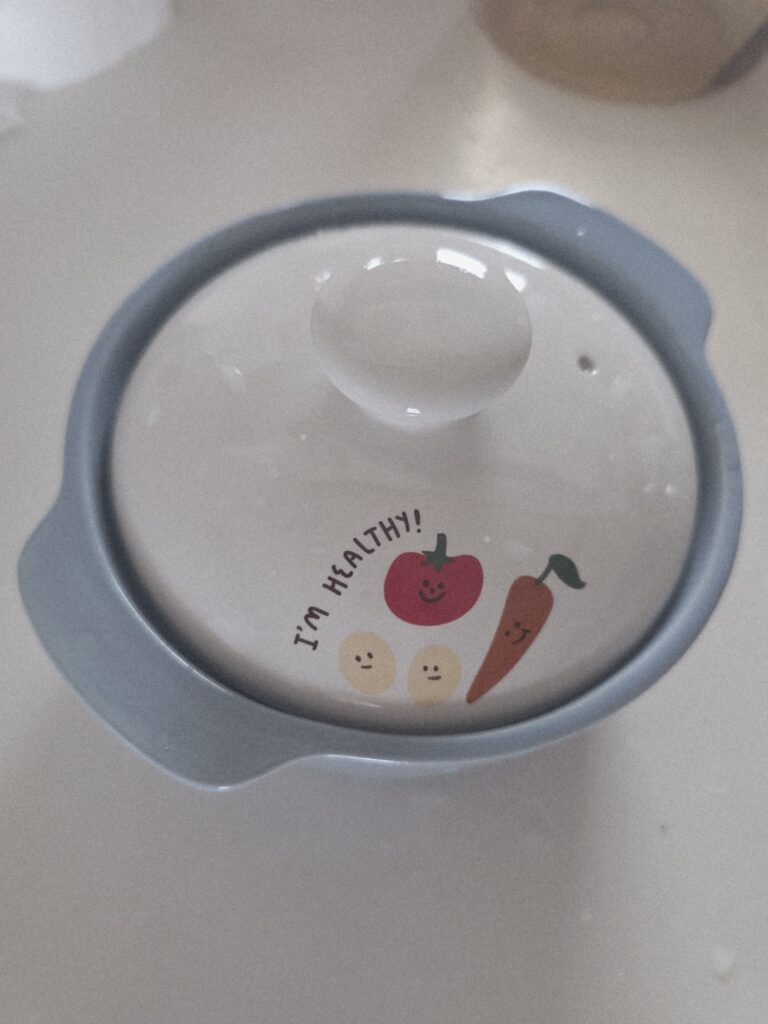
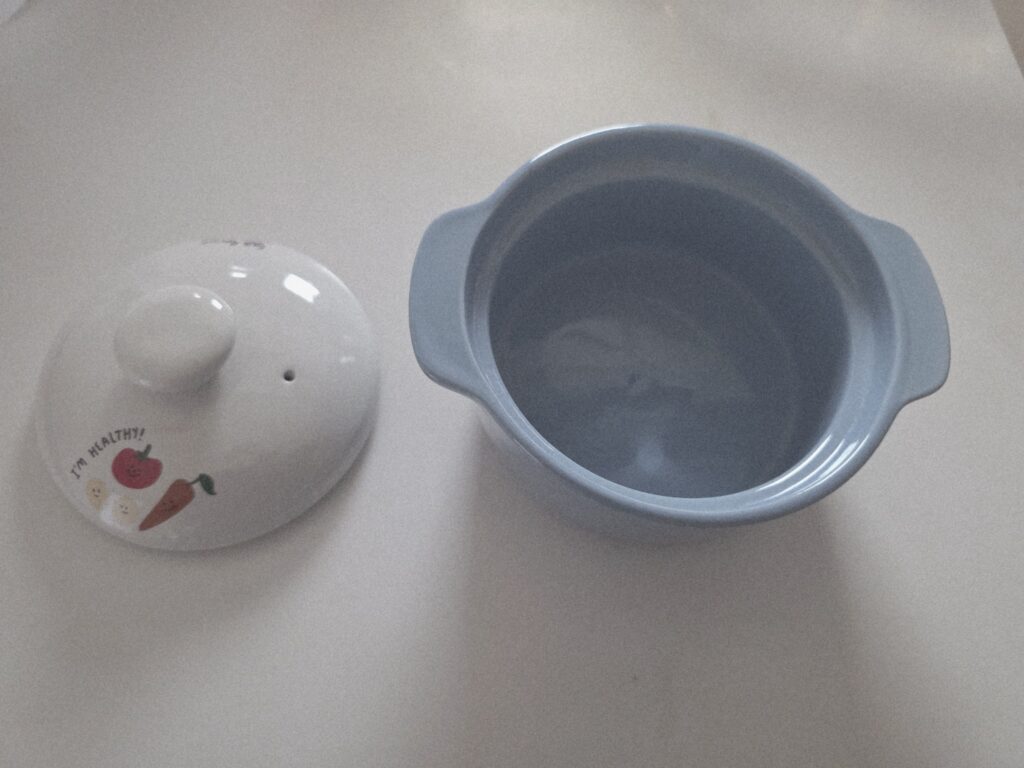
The Daiso Ceramic Egg Steamer is a small, round ceramic pot designed specifically for making Korean egg custard (gyeranjjim) in the microwave. At first glance, it almost looks too cute to be a kitchen tool. The white domed lid features a cheerful “I’M HEALTHY!” inscription surrounded by illustrated vegetables: a smiling tomato, a grinning carrot, and a couple of round garlic cloves. The body itself is a calm gray-blue, glazed smooth, with two small handles on either side for easy gripping — the kind of vessel that looks charming sitting on your kitchen counter even when it’s not in use.
Look closely at the lid and you’ll notice a tiny steam hole at the very top. This is a crucial design detail: it allows pressure to escape safely during microwave cooking, keeping things from getting messy and ensuring your egg custard steams evenly rather than just boiling unevenly.
For 3k won— roughly the price of a subway card top-up — the craftsmanship feels genuinely good.
How I Made Korean Egg Custard with It: Step-by-Step Recipe
I kept my first test simple and classic. Actually, the product description was even simpler, but if you’re new to gyeranjjim, this is the most beginner-friendly version you’ll find.
Ingredients:
- 2 eggs
- 100ml of water
- A small handful of chopped green onion
- A small amount of diced carrot
- A pinch of salt
Instructions:
Step 1: Crack both eggs directly into the ceramic pot. No need for a separate bowl — this is the whole point of the design.
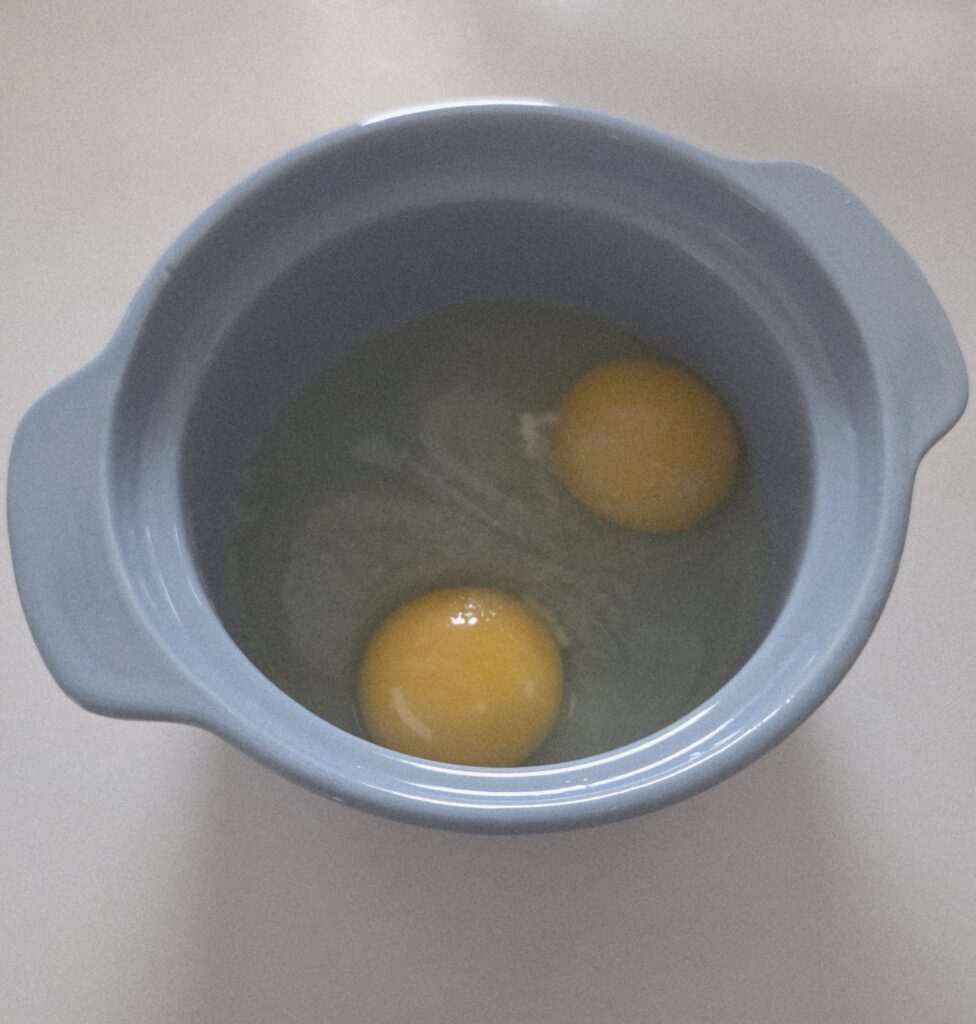
Step 2: Add approximately 100ml of water. Some people prefer using unsalted chicken stock or broth for extra depth of flavor, but plain water gives you a clean, mild result that lets the egg flavor shine through.
Step 3: Add your chopped green onion, diced carrot, and a small pinch of salt. Stir everything together with a fork or chopsticks until the yolk and whites are fully combined and the vegetables are evenly distributed.
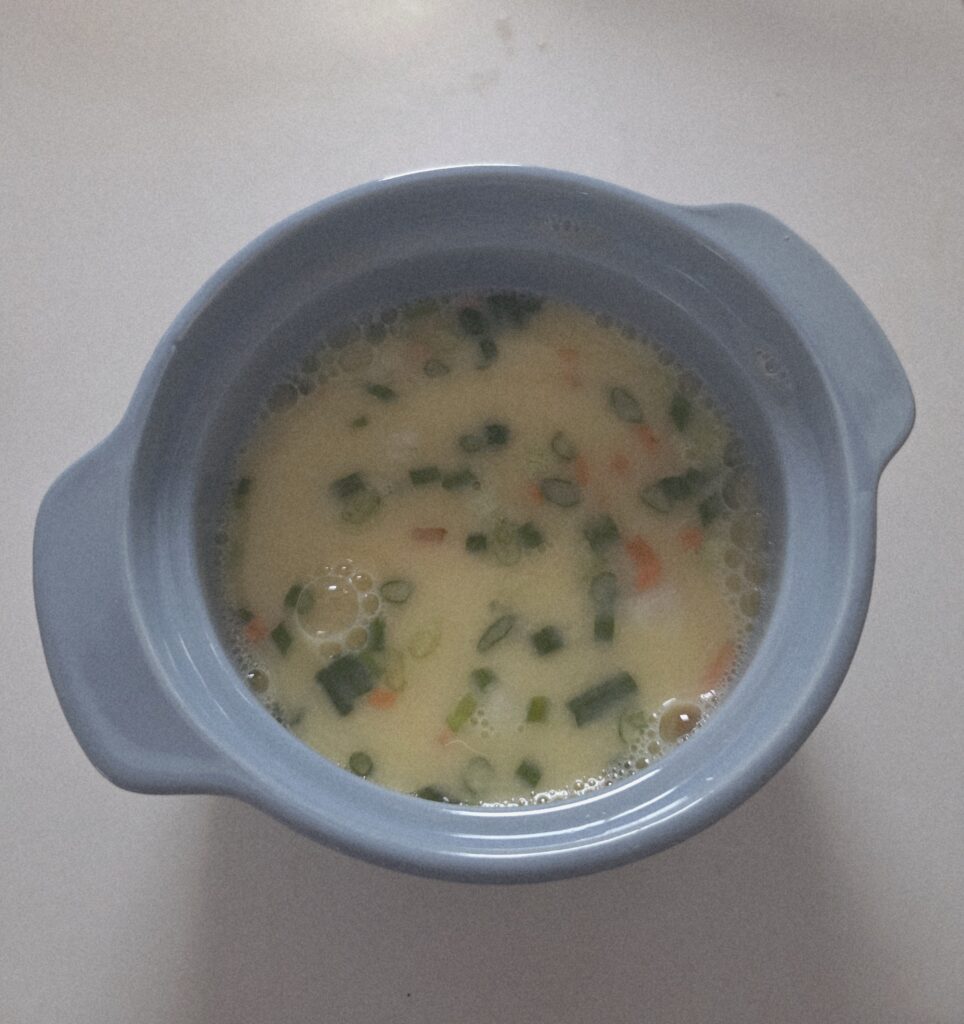
Step 4: Place the lid on top. Make sure the steam hole at the top isn’t blocked by anything. Gently place the pot in the center of your microwave turntable.
Step 5: Microwave on full power for 3 minutes and 30 seconds.
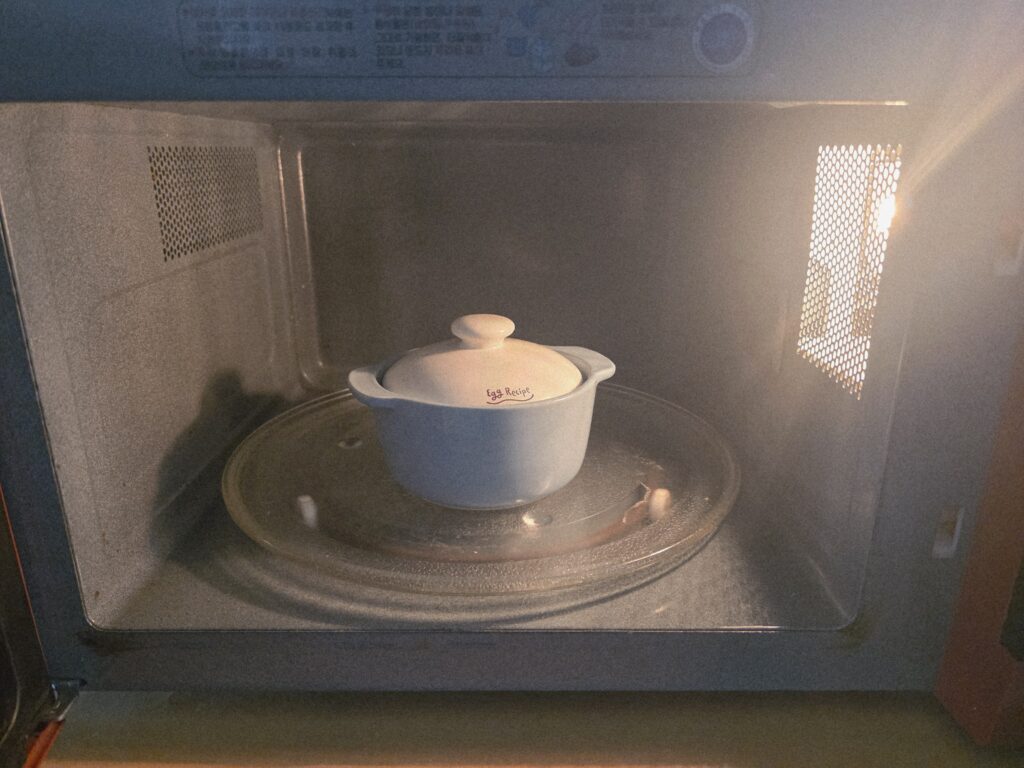
Step 6: Remove carefully — the pot and especially the lid will be hot. Use a cloth or the silicone trivet shown in my photos. Let it sit for about 30 seconds before eating, as it continues cooking slightly from residual heat.
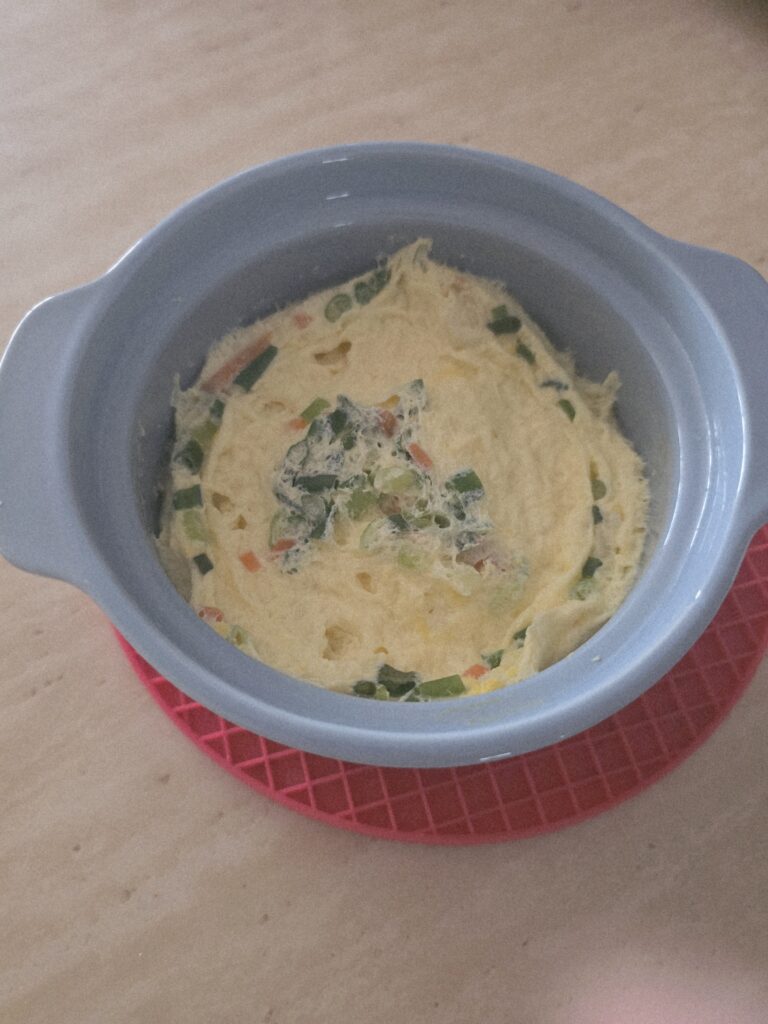
That’s the entire process. No water bath. No stovetop. No watching a pot. Walk away, pour your coffee, and come back to breakfast.
The Results: How Did the Egg Custard Actually Turn Out?
Opening the lid after 3.5 minutes, I met a well-cooked fluffy egg custard — pale yellow with flecks of green onion and vibrant orange carrot pieces throughout. The texture was soft and slightly wobbly in the best way: firm enough to scoop with a spoon, yielding enough to feel like proper egg custard rather than a microwave scramble.
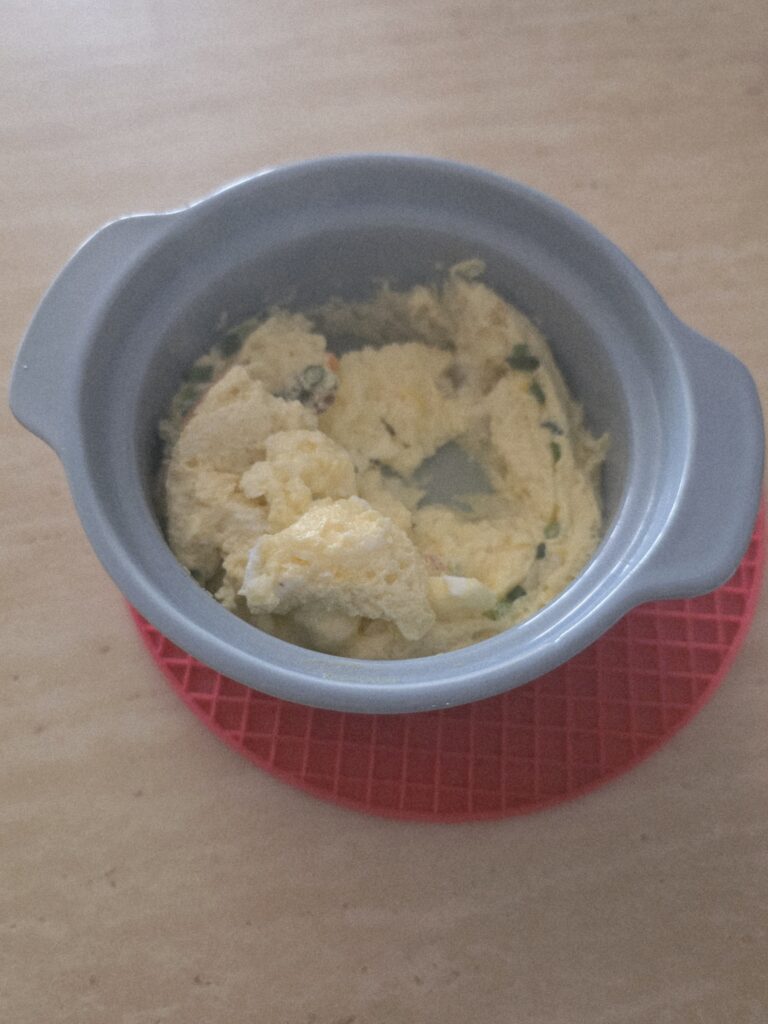
To be honest about the one star I held back: the texture is noticeably denser than the ultrafluffy, cloud-like gyeranjjim you’d get from a Korean restaurant or from slow-steaming it in a ttukbaegi on the stove. The microwave method produces a slightly more compact curd. It’s delicious and completely satisfying — it’s just a different result from the stovetop version, and worth knowing before you expect an exact replica.
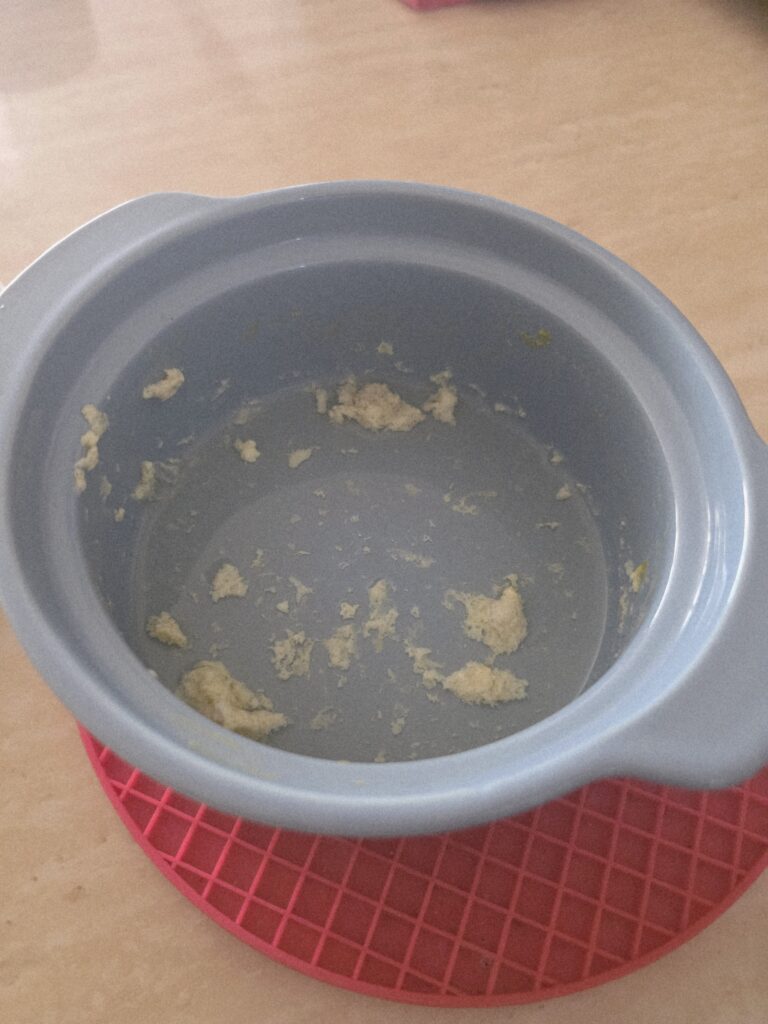
And after eating? I was pleasantly surprised to find the pot almost clean already. The egg custard came away from the ceramic walls so easily that a quick rinse was all it took to reset the pot for next time. That kind of low-effort cleanup is something I genuinely didn’t expect from a 3k won product.
Pros and Cons: My Honest Assessment
What I Liked
Cleaning is genuinely painless — and the photos prove it. This was my biggest surprise. If you look at the photo I took right after finishing the egg custard, you can see that almost no egg is left clinging to the inside of the pot. The smooth ceramic glaze is naturally non-stick in a way that plastic and glass containers simply aren’t — the cooked egg custard lifts away cleanly rather than baking into the surface. After eating, I rinsed the pot with warm water and gave it a gentle scrub with a soft sponge — done in under 30 seconds. No baked-on residue, no soaking, no scrubbing stubborn egg bits. Compare that to the sticky mess a regular microwave-safe bowl or plastic container can leave behind, and the ceramic glaze makes a genuinely meaningful difference in your daily cleanup routine.
The design is genuinely charming. I know this sounds like a silly thing to emphasize in a product review, but the “I’M HEALTHY!” lid actually makes me smile in the morning. It’s the kind of small detail that transforms a functional item into something you enjoy having in your kitchen. I’ve already had guests comment on it. It also makes a wonderful small gift — it genuinely does not look like a 3,000 KRW product.
Perfect single-serving size. Two eggs fills the pot to a comfortable level that yields one generous serving — ideal for people living alone or making a personal side dish without leftovers.
True microwave convenience. You are not babysitting a flame or checking water levels. Set the timer, walk away, come back. The whole thing from cracking eggs to eating takes under 10 minutes including prep.
Great value. Considering the super low cost, this is simply hard to argue with. Using it for only a few times will already give you enormous value.
What Could Be Better
3.5 min is longer than it sounds. If you’re expecting a 90-second microwave result, this will feel slow. On a rushed morning, 3.5 min is the difference between getting out the door on time and not. That said, it’s completely hands-off cooking, so you can be doing other things while it runs.
Texture won’t match stovetop gyeranjjim. As mentioned above, the microwave method produces a slightly denser curd than the traditional steamed version. This is a characteristic of microwave cooking generally, not a flaw in the pot design — but it’s worth setting expectations accurately.
Who Should Buy the Daiso Ceramic Egg Steamer?
Single-person households (1인 가구): This was clearly designed with solo living in mind. The portion size is perfect for one, the cleanup is minimal, and the whole process is low-effort. If you live alone and want a quick, protein-rich side dish without the hassle of a full cooking setup, this is a strong purchase.
Busy office workers: On mornings when you have 10 minutes before you need to leave, this delivers a warm, nutritious result without demanding your attention. Prep while the coffee brews, microwave while you get dressed, eat before you head out.
Parents with young children: Kids love gyeranjjim, and this method is genuinely safer than stovetop cooking — no open flame, no hot steam from an uncovered pot, no risk of spilling boiling water. The microwave does all the work.
Anyone building a Korean home cooking repertoire: If you regularly cook Korean food at home and want to add gyeranjjim to your weekly rotation, this is the easiest possible entry point — no special equipment, no extra pots, and a recipe you can master on the first try.
Where to Buy
Available at Daiso stores throughout Korea for ₩3,000. Look in the kitchen and cookware section. It has been popular enough to sell out at some locations, so if you spot it, consider grabbing one (or two — it makes a lovely small gift).
If you’re based outside Korea, check Korean specialty supermarkets or platforms like Coupang Global or Korean Amazon sellers. Similar microwave ceramic egg steamers are available internationally, though exact pricing will vary.
FAQ
Q: Does the lid need to stay on during microwaving?
A: Yes, the lid is essential. It traps steam inside the pot and helps the egg cook evenly throughout rather than just heating from one direction. The small hole at the top of the lid safely vents pressure so there’s no risk of buildup. Do not microwave with the lid off — you’ll end up with a less consistent result and potential mess.
Q: Can this ceramic pot be used in a conventional oven or on a gas stove?
A: No, it is not. This pot is designed and intended for microwave use.
Final Verdict
For ₩3,000, the Daiso Ceramic Egg Steamer consistently delivers well beyond its price point. It makes genuinely good microwave gyeranjjim in under four minutes, cleans up in seconds, and looks charming enough to leave on your kitchen counter as a permanent fixture. Whether you’re living solo, feeding a family on a busy weekday morning, or just looking for the easiest way to add more protein to your daily meals — this little pot earns its kitchen real estate.