Nishi Civic Pool | Fukuoka’s 3.3m Deep Pool Guide
I previously rounded up the top five public swimming pools in Fukuoka based on how close they were to the city center. This time, I wanted to share my experience visiting a pool that wasn’t on that list. When I chose where to go, I focused more on the facilities than the distance.
Today I’m introducing 후쿠오카 총합서시민풀 (Fukuoka City Nishi Civic Pool Complex), where you can even practice starts in a 3.3m-deep pool. On Google Maps, it’s listed as Fukuoka City Nishi Civic Pool Complex.
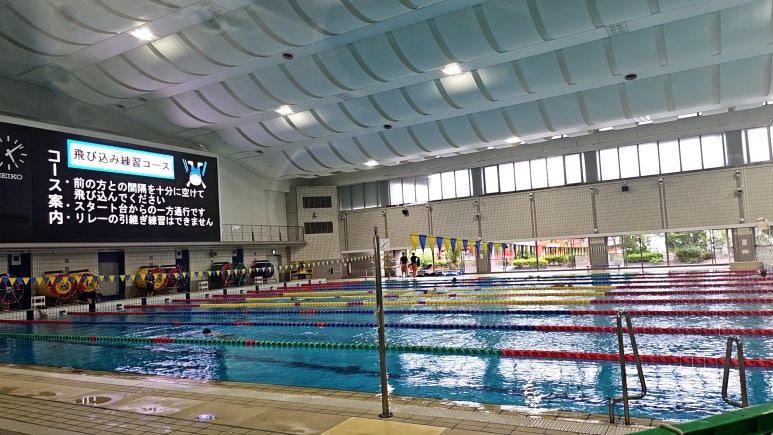
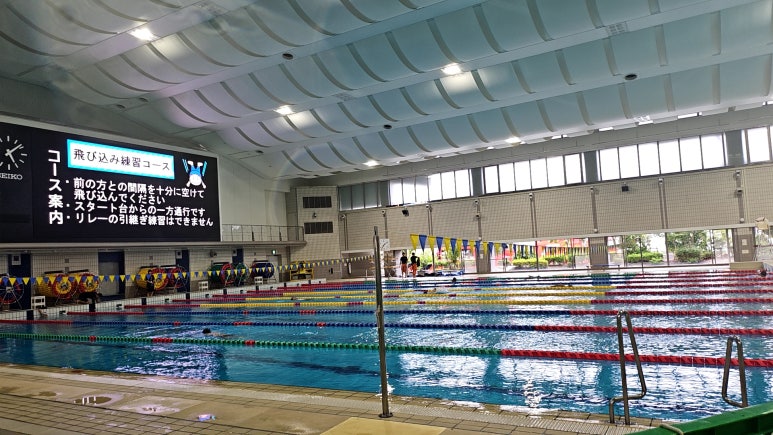
The main pool at Nishi Civic Pool.
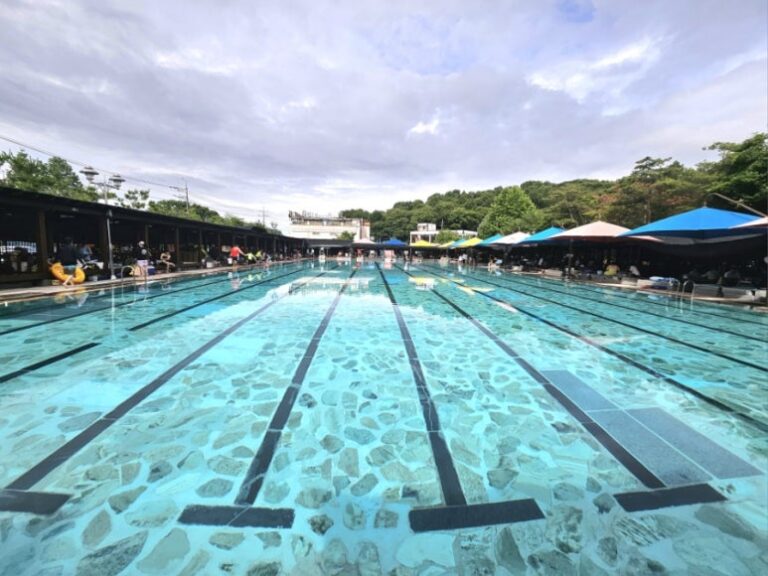
Isn’t the natural light reflecting across the huge pool beautiful? If you’re a swimming enthusiast, this place is one you definitely shouldn’t miss.
🚌 Heading Over With a One-Hour Bus Ride
I chose the simplest route without transfers. I took Bus 506 heading west from Platform 5 on the first floor of the Hakata Station Bus Terminal. After about an hour, I arrived at the Nishi Civic Pool Complex bus stop. Since the stop is named after the pool, I spotted the entrance as soon as I got off.
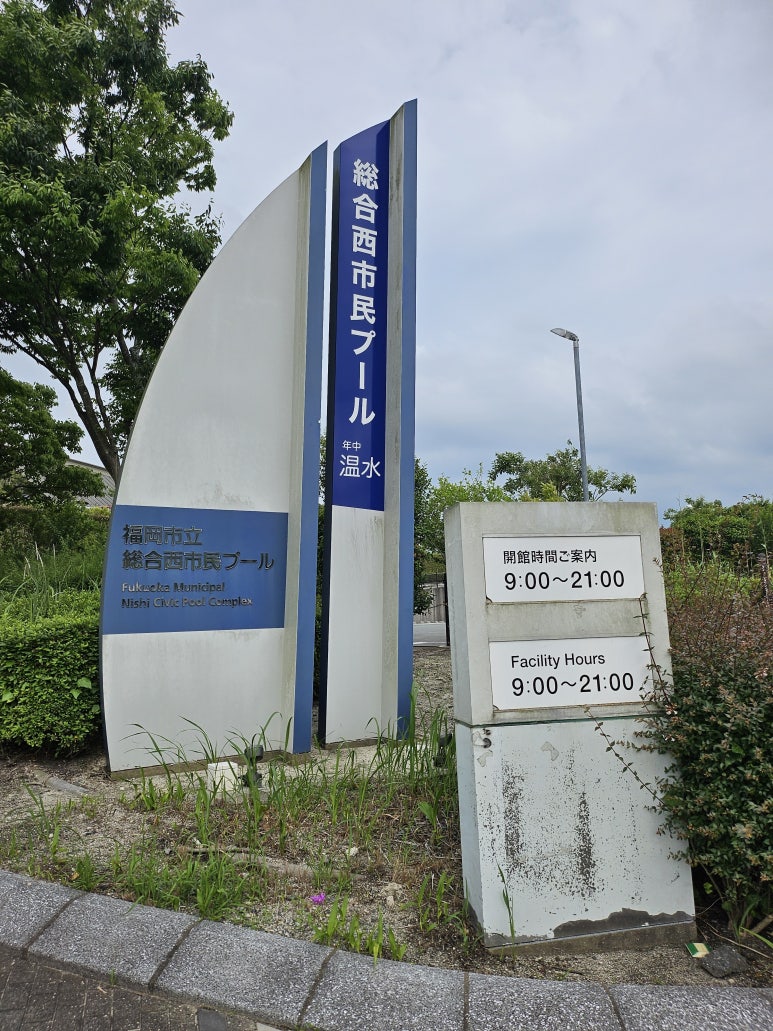
The entrance to Fukuoka City Nishi Civic Pool Complex.
There are actually many other ways to get there besides Bus 506. For detailed routes and real-time arrival information, I recommend searching your departure point and Nishi Civic Pool on Google Maps.
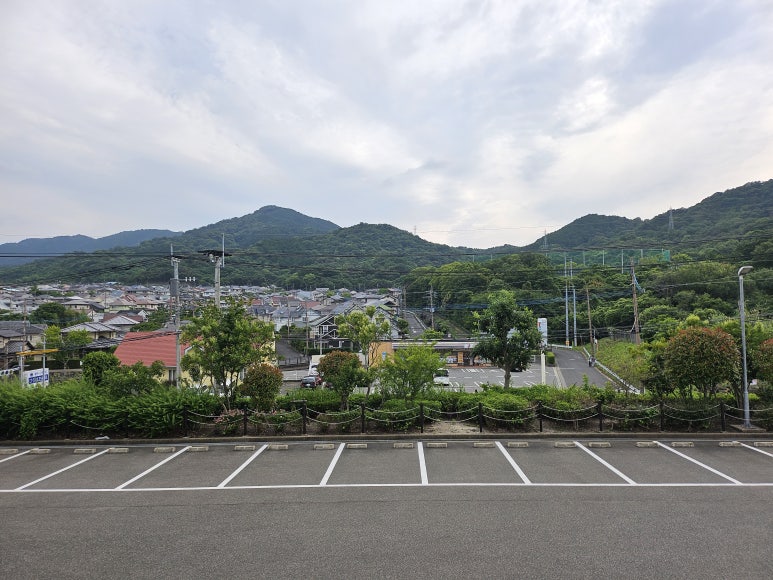
Since it’s located on the outskirts of the city, the area felt very quiet with few people around. It had a peaceful, almost rural atmosphere.
Fukuoka City Nishi Civic Pool Complex
1-chōme-4-1 Nishinooka, Nishi Ward, Fukuoka, 819-0046, Japan
🎫 Getting In With a Korean-Friendly Kiosk
Once I followed the entrance into the main building, I found the ticket kiosk immediately to the left of the information desk. The language settings could be changed to Korean, so it was easy to use even without Japanese. Since it’s a municipal pool, it also supported English and Chinese.
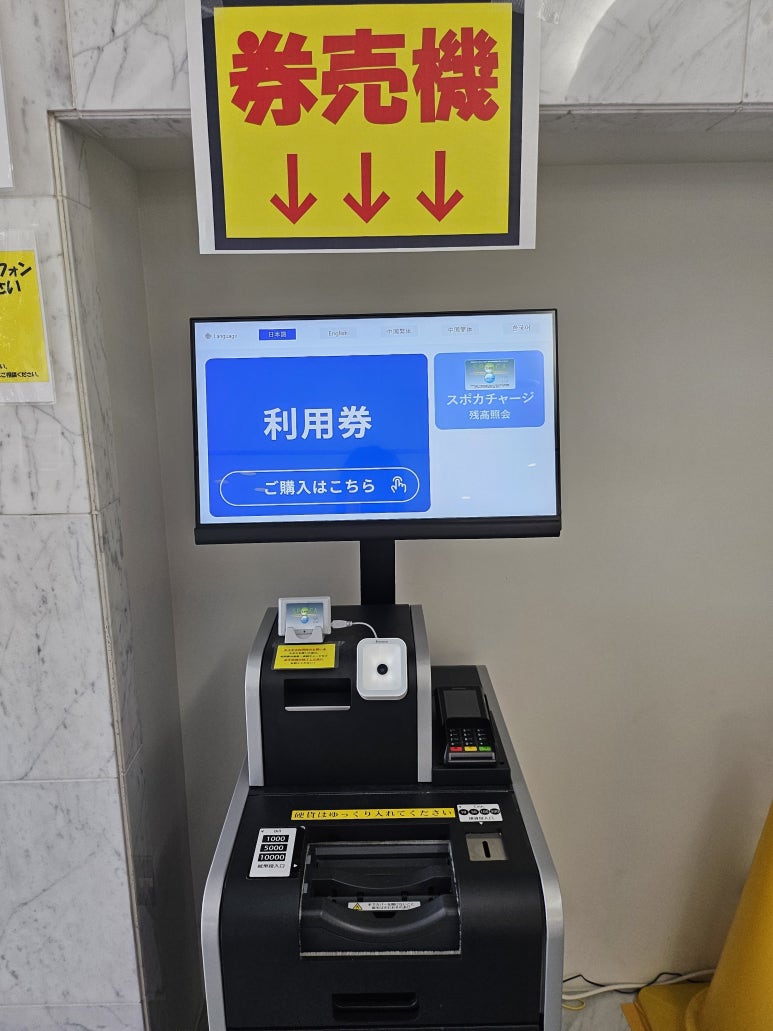
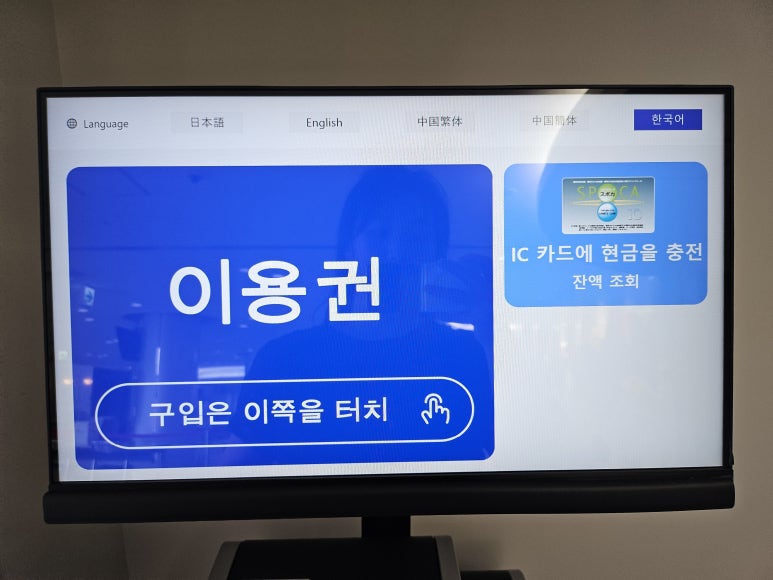
You can select the language at the top of the kiosk.
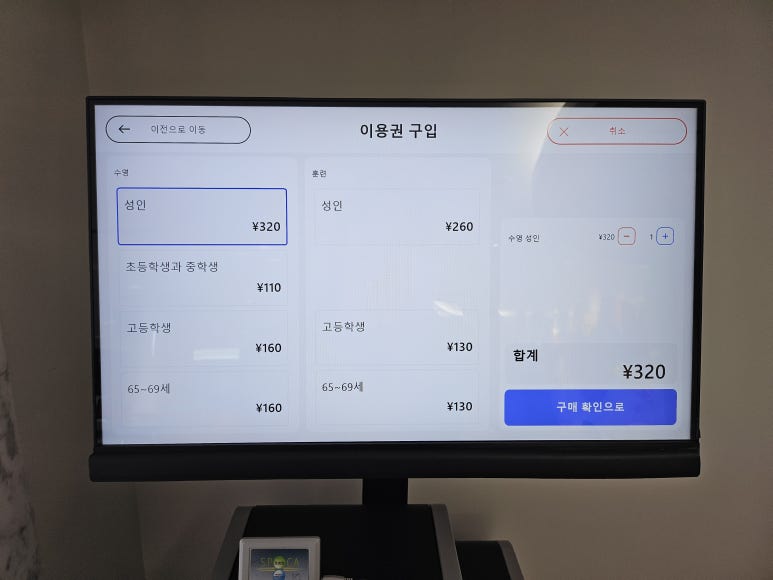
Adult swimming ticket purchase screen.
The admission fee was 320 yen for two hours. Most public pools in Fukuoka seemed to charge about the same amount.
Cash, credit cards, and Suica (IC cards) were accepted.
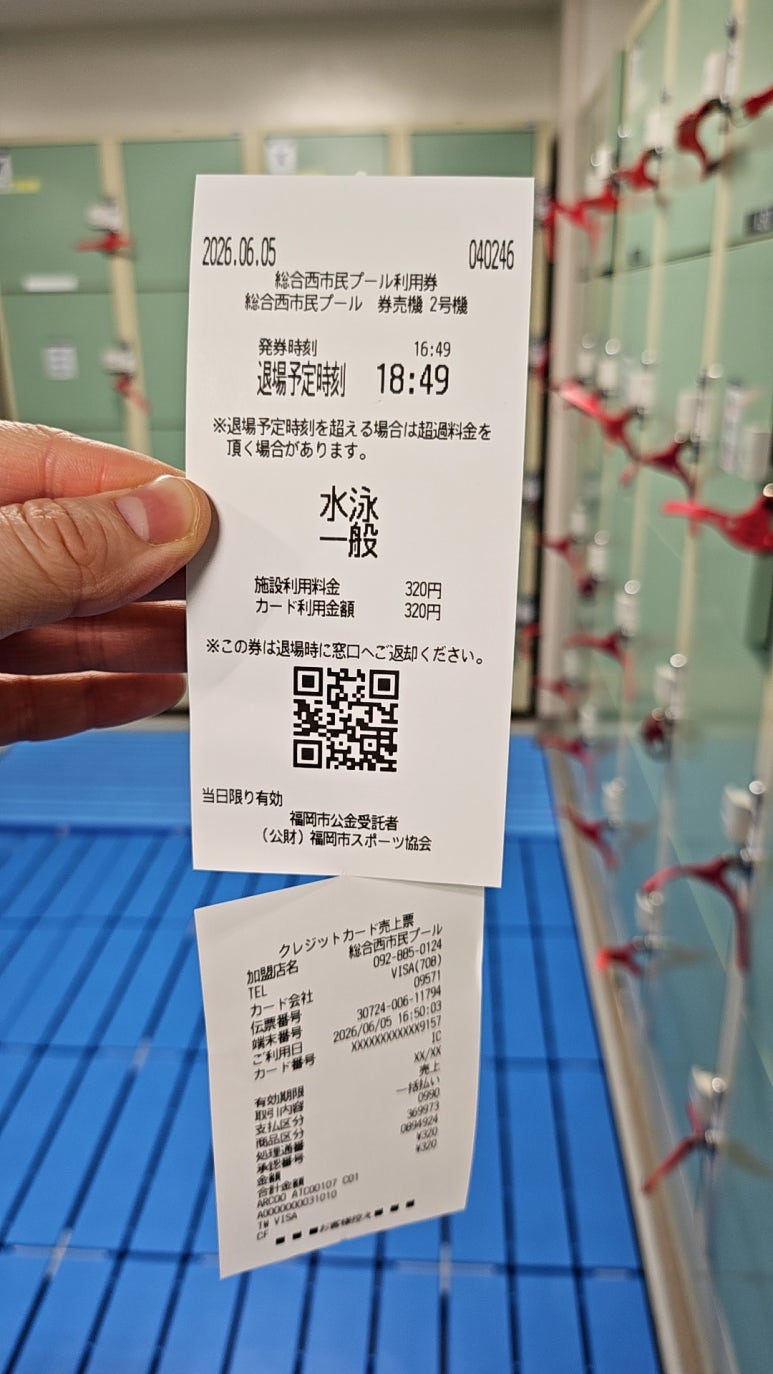
Swimming admission ticket.
After purchasing a ticket, the receipt showed both the entry and exit times. Most public pools in Japan don’t operate on designated public swim sessions. Instead, you can use the pool and locker facilities for two hours from your personal entry time.
I entered at 16:49 and had to leave by 18:49. A staff member explained that I needed to show the receipt at the information desk when leaving to prove I’d stayed within the two-hour limit. If you exceed two hours, you’ll have to pay an additional fee. In other words, don’t throw away your receipt.
(Though honestly… when I left, it looked like nobody would notice if someone quietly slipped out without handing it in. Haha.)
🔑 Dealing With Coin Lockers When You Have No Cash
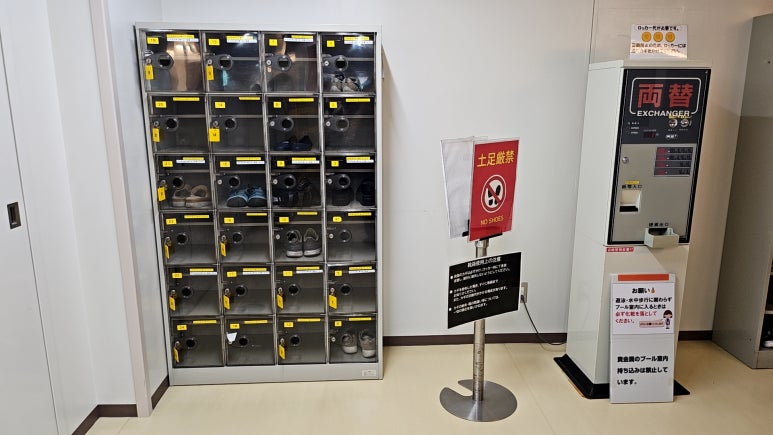
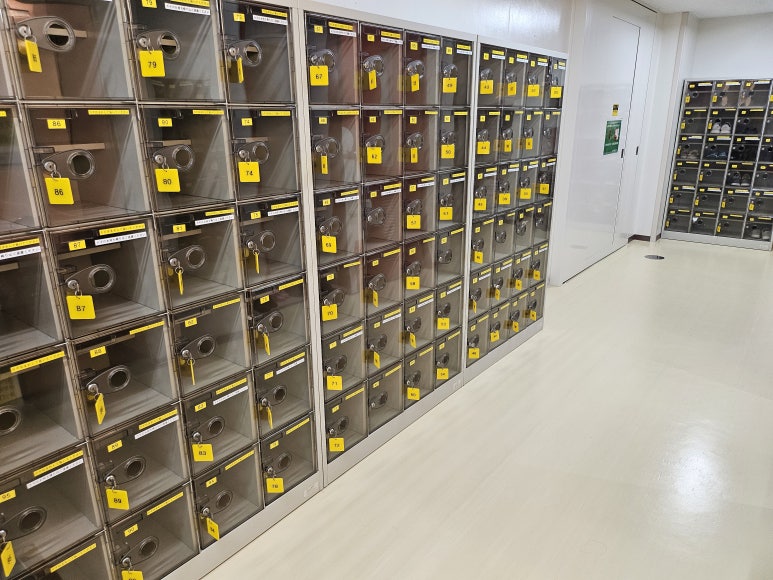
Near the changing room entrance, there were shoe lockers and a coin exchange machine.
The translucent plastic lockers right inside the changing room entrance were for shoes. After taking off your shoes, you could place them in any available compartment, keep the key, and head farther inside.
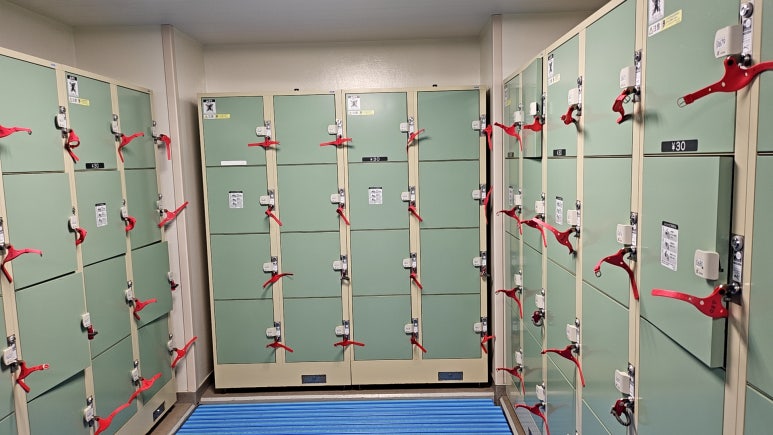
Clothing lockers.
Inside, I found larger mint-colored metal lockers for clothing.
There were no assigned locker numbers, so I could use any locker I liked. One thing to note: the clothing lockers required payment, and they only accepted coins. The shoe lockers were free.
The fee was 30 yen, paid with three 10-yen coins. In a world full of fintech and AI, needing coins felt surprisingly old-school.
Still, after traveling an hour to get there, I wasn’t about to turn around and leave.
So I came up with a solution. I had paid for my admission ticket by card, so I asked the information desk for a cash refund. Then I exchanged the cash into 10-yen coins using the machine near the changing room entrance. Problem solved, and I headed confidently into the pool.
💳 Diving Into the 3.3m Pool With a Special Card
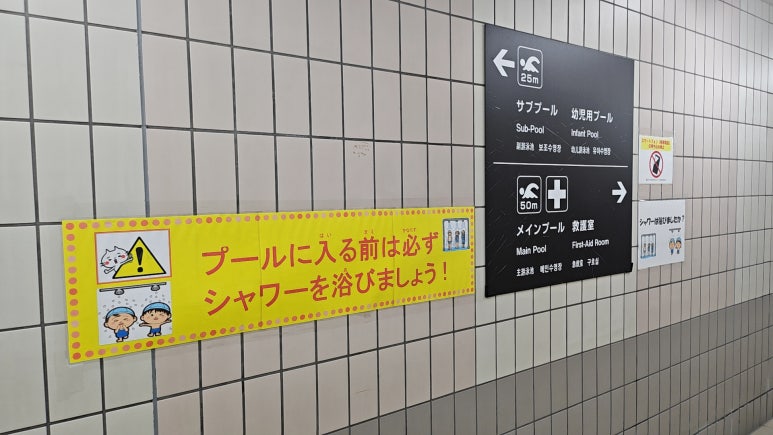
The sign I saw immediately after leaving the changing room.
Since this is a large facility that hosts international competitions, it has both 50m and 25m pools. Following the signs, the children’s pool and 25m pool were to the left, while the 50m main pool was to the right.
But there was a surprise.
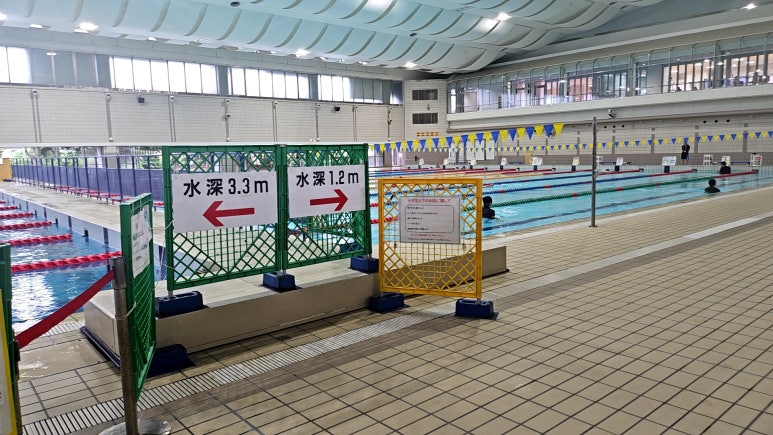
The main pool divided by a temporary wall.
When I visited, the 50m pool wasn’t being used at its full length. Outside of competition periods, it was divided in half, with one side operating at 1.2m depth and the other at 3.3m depth.
It was a little disappointing, but experiencing a competition-standard 3.3m pool still felt worthwhile.
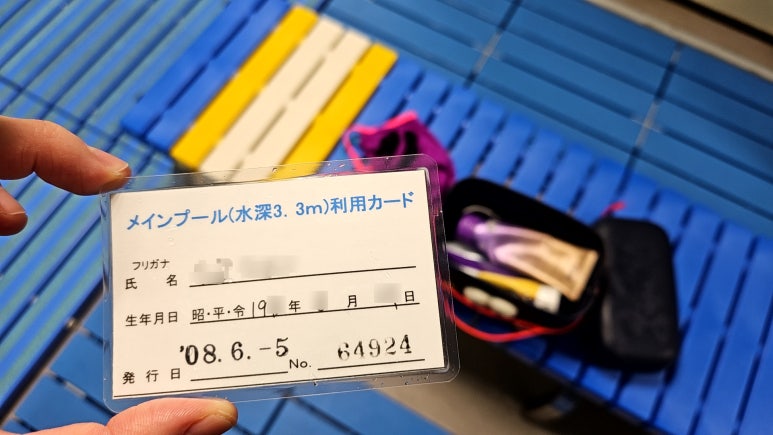
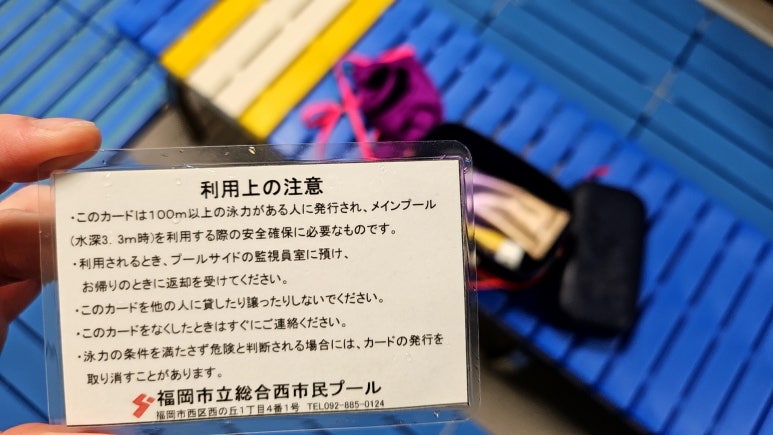
Deep-water access card.
To enter the 3.3m section, I needed a membership card.
I found out the hard way. When I tried to walk in, a lifeguard quickly came out from the guard station and stopped me. Through a mix of limited Japanese and hand gestures, I received an A4 form and a pen. I filled in basic information such as my name, birth date, and address, checked off the swimming strokes I could complete over 50m, answered questions about my swimming experience, and submitted the form.
Based on that information, they created a card. Since the card was prepared and laminated on-site, it took a little time. The good news was that once issued, it could be reused on future visits.
When entering the main pool, I exchanged the card for a green wristband. Only swimmers wearing that wristband could access the 3.3m area, so don’t try sneaking in without one.
When leaving, I returned the wristband and got my card back.
🏊 Swimming in Nishi Civic Pool’s Deep Water
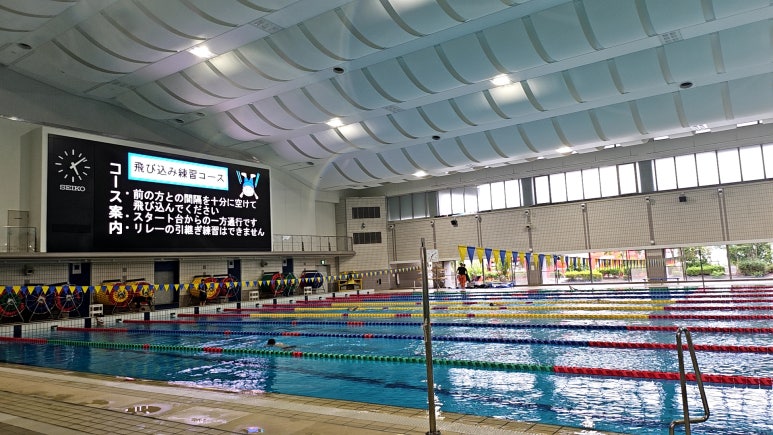
The pool had ten lanes in total. When I visited around 5 PM on a Friday, only about three people were using the 3.3m section. It felt incredibly spacious, with more than enough room for everyone.
Because there were so few swimmers, the water quality felt very clean and comfortable.
I could also freely use equipment such as kickboards, pull buoys, fins, snorkels, and paddles. It was easily one of the most luxurious swimming sessions I’d ever had.
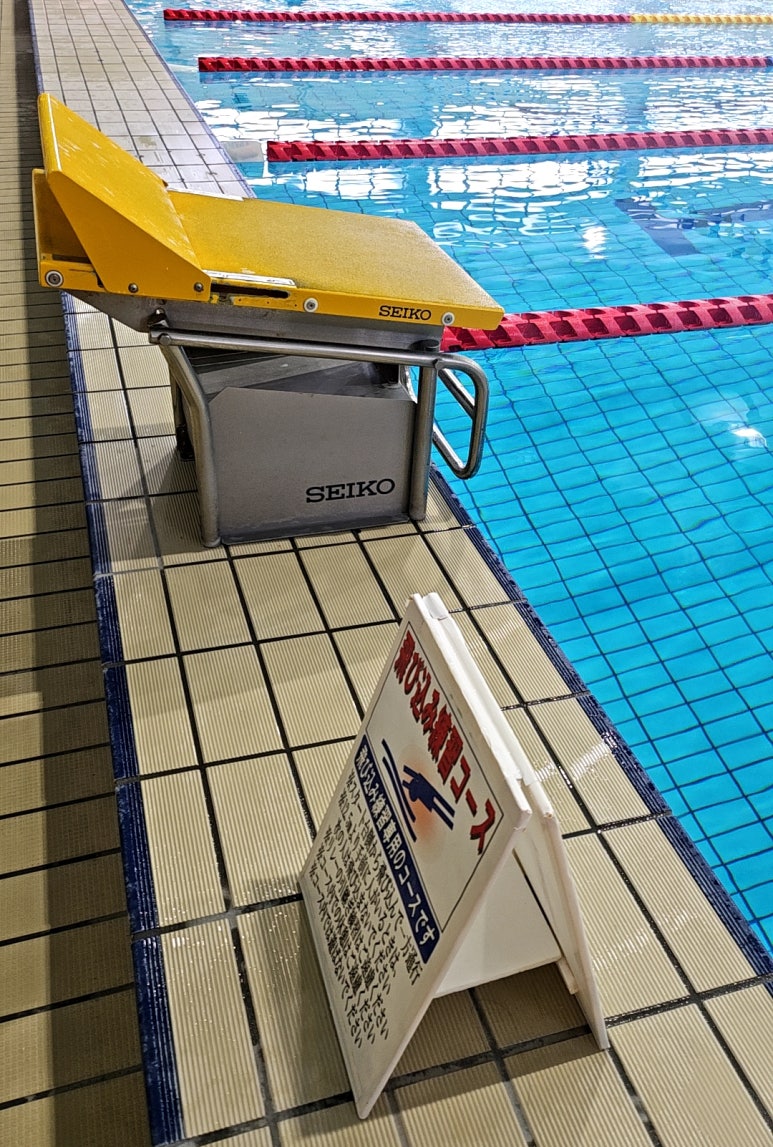
The yellow Seiko starting block commonly used in Japan.
A starting block was set up in the far-right lane, and it was available even during public swim hours. That’s a huge draw for anyone who wants to practice starts seriously. For the price of admission, it felt like I had rented my own lane. I spent so much time practicing crouch starts that I ended up returning to Korea with sore hamstrings.
🚿 Following Japanese Pool Etiquette
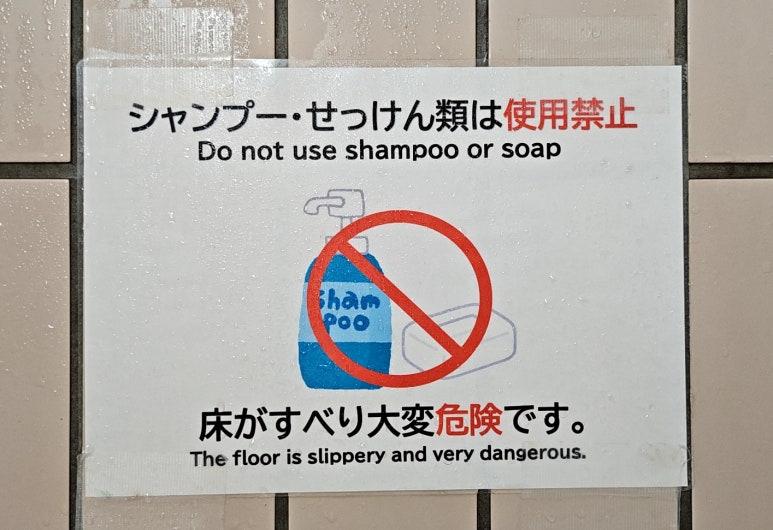
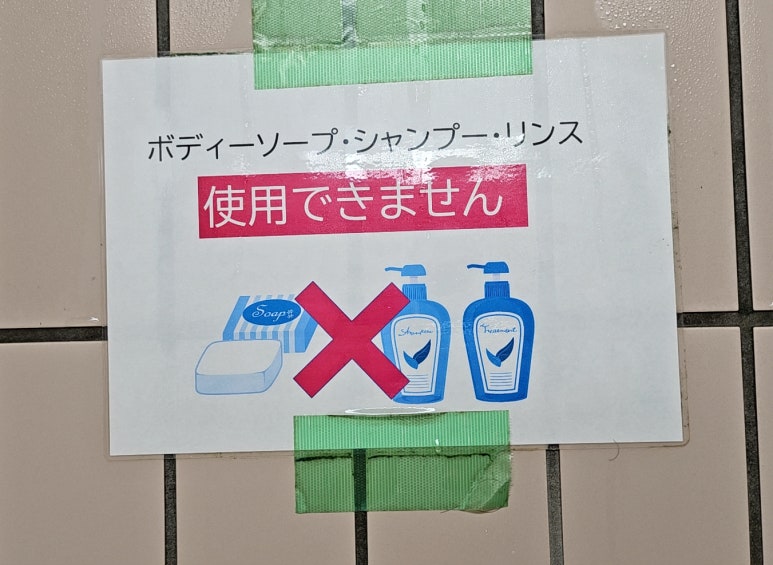
Signs prohibiting soap use in the shower area.
The biggest difference compared to pools in Korea was that soap, shampoo, and conditioner weren’t allowed in the shower rooms. Both before and after swimming, I could only rinse with water. The reason was to prevent slippery floors.
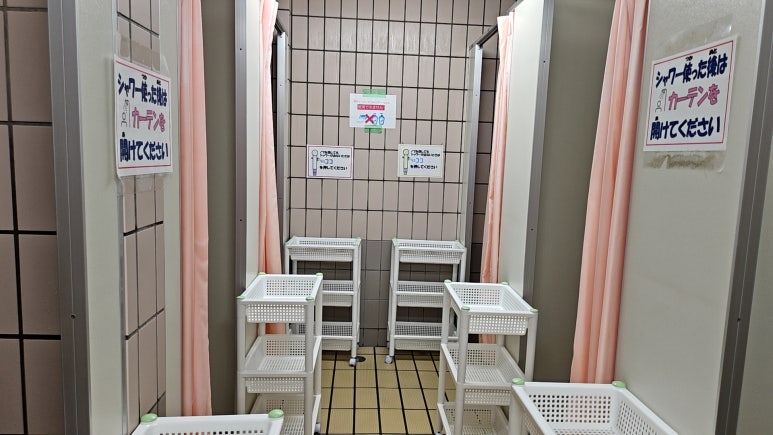
Private shower stalls with partitions and curtains.
Unlike the open shower areas common in Korea, the showers here were divided into individual stalls. Each stall had a three-tier basket setup in front of it.
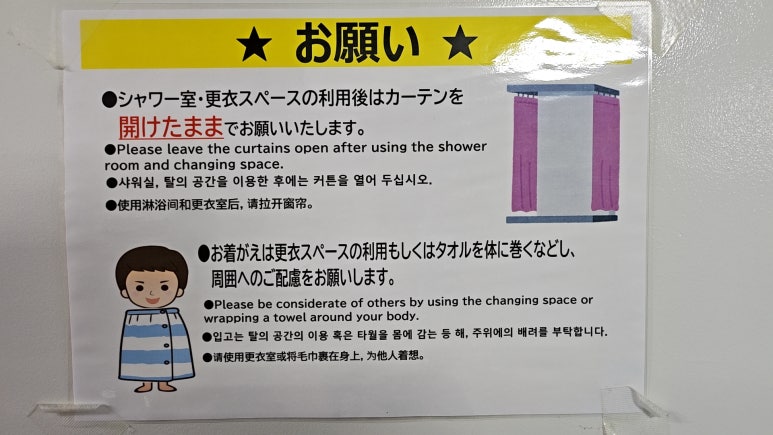
Information notice also displayed in Korean.
After using a shower stall, it’s considered good manners to leave the curtain open when exiting.
Another etiquette rule is that after showering, important body areas should be covered with a swimsuit or towel. Walking from the shower area to the lockers completely uncovered isn’t considered appropriate.
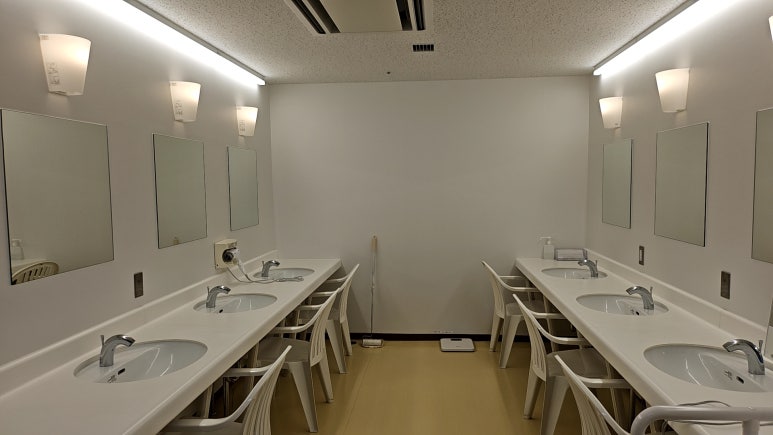
Powder room.
The same rule applied when drying your hair. At minimum, you should wear a tank top or similar clothing. Visitors accustomed to Korean pool locker room culture might find this a bit unfamiliar.
Hair dryers were installed on both sides of the room. Surprisingly, hardly anyone was using them, so I ended up having the powder room almost entirely to myself.
⌚ Swimming With a Smartwatch Cover
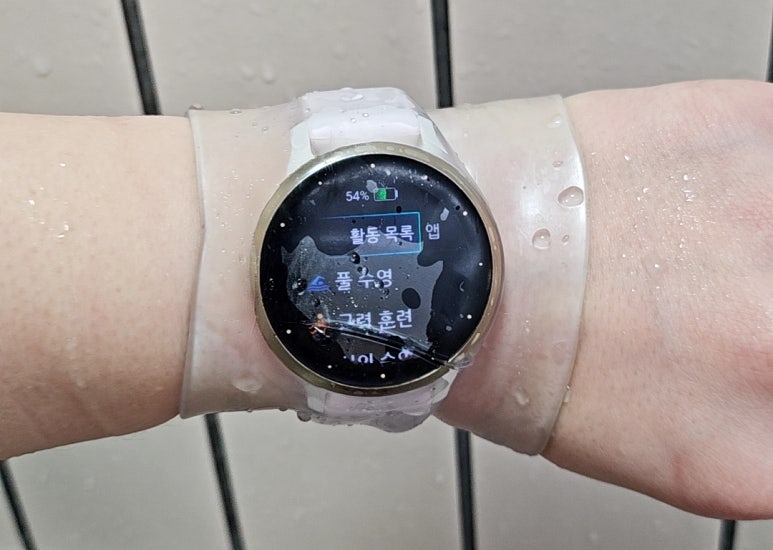
The transparent silicone band I introduced in a previous post.
Japanese pools generally prohibit watches and jewelry, but some facilities allow smartwatches if they’re completely covered by a silicone protective band. Nishi Civic Pool allowed smartwatch use under that condition, so I was able to record my swim data.
Piercings, earrings, rings, and necklaces must all be removed before entering the water. If you forget, a lifeguard will likely stop you and hand you a small storage bag.
If you have tattoos, make sure they’re covered. Otherwise, entry may be denied.
💡 Who Should Come Here?
1. Swimmers who want to experience a 3.3m-deep pool.
2. Anyone who wants to seriously practice starts using a starting block during public swim sessions.
3. Visitors who don’t mind traveling a little farther in exchange for cleaner and better-maintained facilities.
💬 Wrapping Up With Final Thoughts
Fukuoka City Nishi Civic Pool Complex reopened after remodeling two years ago, and the facility felt spacious, clean, and well maintained. If you’re looking for a swimming experience that’s a little different in terms of facilities and pool depth, I’d confidently recommend Nishi Civic Pool.
At a glance
📍 Location: 1-minute walk from the 西市民プール (Nishi Civic Pool) bus stop
⏰ Hours: 09:00–21:00
💰 Admission: Adult swimming 320 yen / Locker 30 yen
📞 Phone: 092-885-0124
🅿️ Parking: On-site parking lots 1–3 available
🗺️ Getting There With Easy Transport Options
From Platform 5 on the first floor of the Hakata Station Bus Terminal, take Bus 506 and get off at the 西市民プール (Nishi Civic Pool) stop. Travel time is about 50–60 minutes, and schedule information can be checked easily on Google Maps.
If you’re driving or taking a taxi, you can get there in under 30 minutes.
🔗 Exploring More Fukuoka Pool Options
I also put together another post covering public swimming pools that are easy to reach from Tenjin and Hakata. If you’re trying to make the most of your travel schedule, those city-center options may be worth checking out as well.
A third-year swimmer’s guide to Fukuoka public pools! Complete with locations, prices, and useful tips.
The weather has already started feeling warm and humid, so it seems summer is on the way. Are you planning your summer vacation yet?
blog.naver.com